
The real costs of organising a conference yourself: in time, stress, and risk

Doing it yourself may seem cheaper—but is it really?
Are you organising your conference entirely on your own? On paper, that often appears more cost-effective. No external agencies, no additional fees. But in practice, the real price isn’t financial—it lies in time and workload. What many organisations don’t realise is that the hours spent on preparation, the risks of inexperience, and the burden on the team together form a significant expense in time and energy. In this blog, you’ll discover which costs of conference organisation are often overlooked and why “doing it yourself” rarely turns out to be cheaper—especially considering the time investment required for a medical conference, where specific expertise is needed for tasks such as abstract submission handling or accreditation applications.
The visible costs: what everyone does account for
Everyone is familiar with the obvious direct costs: venue rental, speaker fees, catering, audio-visual equipment, printed materials, and promotion. These are the amounts clearly shown in quotes, budgets, and eventually invoices.
What is less visible—and often not taken into account—are the hours your team spends on meetings, planning, coordination, and solving unforeseen problems. These are often not support hours, but hours from highly educated professionals, doctors or researchers. In such cases, they temporarily put aside their core responsibilities.
💡 Did you know…
An average medical conference with 150–200 delegates can easily require more than 250 to 300 hours of preparation, logistics, and communication? That equals over 7 to 8 full workweeks!
✅ Tip
Make a realistic estimate in advance of the hours required from all involved employees. Include not only meetings, but also email communication, supplier contact, invoice handling, and script preparation. Only then will you gain real insight into the total time investment of your conference. It’s better to overestimate than to discover afterward that the hours were underestimated.
The hidden costs: time, stress, and mistakes
In addition to visible costs, three factors determine the real price of organising a conference yourself: time loss, high workload, and mistakes.
1. Time loss due to divided responsibilities
Everyone takes on “a piece” of the organisation: communication, speakers, sponsorship, or logistics. But no one oversees the full picture. The result: duplicated work, misunderstandings, and missed deadlines. For example, the communications department sends invitations while the secretariat has already sent a separate mailing—leading to duplication and confusion for recipients.
2. High workload due to lack of overview
Organising a conference is often done “on top of” regular work. While daily tasks continue, the workload piles up. Stress increases, especially in the final weeks before the event. Sound familiar? You’re not alone. The profession of event or conference manager has consistently ranked among the top 10 most stressful jobs. Source: Wat zijn de 10 meest stressvolle beroepen? - Tailor You
3. Small mistakes with big consequences
A misspelled name on a badge, incomplete communication with speakers, or a missed accreditation deadline—these may seem like small details, but they can significantly impact the experience of delegates, speakers, and stakeholders. An error in delegate registration can lead to dissatisfaction or missing accreditation points, resulting in reputational damage.
✅ Tip
Create a central planning system with one responsible person per process (e.g., registration, communication, technology), and assign one overall coordinator to maintain the big picture. Use tools such as Trello or Asana to monitor progress and deadlines.
[Text continues below the image]

What it really costs: measurable and immeasurable damage
The cost of organising a conference is more than the sum of quotes. The real loss lies in what you have to give up:
• Time: that cannot be spent on members, research, healthcare, or policy.
• Stress: that increases workload, affects team dynamics, and reduces focus on core tasks.
• Quality: that declines due to lack of expertise or insufficient preparation time.
🔍 Example calculation: A team of three employees each spends an average of 80 hours on conference organisation. At an internal rate of €60 per hour, that already amounts to €14,400—excluding lost productive time. Meanwhile, many agencies can take over the entire organisation for that same amount.
⚠️ Note: Dissatisfied speakers or delegates are less likely to return. A poor experience = lower delegate attendance at the next edition. That’s immeasurable reputational damage.
Why collaboration is often cheaper (and smarter)
A professional conference agency may seem like an extra expense at first glance, but in reality, you save on:
1. Time: Thanks to established run sheets, supplier networks, project management, delegate registration systems, and abstract management systems.
2. Risks: Due to experience with accreditation applications, speaker management, sponsorship acquisition, and extensive supplier networks for services such as audio-visual support.
3. Quality: A professional agency can fully focus on logistical organisation. “A PCO (Professional Congress Organiser) works with run sheets, suppliers, and systems that streamline processes and reduce risks—allowing you to focus on content and quality.”
💡 Did you know…
An experienced PCO typically requires 30% less time for the entire organisation compared to an inexperienced internal team? That difference directly translates into clarity, control, and professionalism.
✅ Tip
View collaboration not as a cost, but as risk reduction and quality assurance. Always ask for references, experience within your field, and a transparent cost structure.
Organising cost-neutral with a PCO: the business model explained
Another often overlooked advantage: a PCO can organise a conference in a cost-neutral way. This means that organisational costs are covered through income from registrations, sponsorships, and exhibitors.
A PCO has experience in setting up a smart financial structure around conferences, including:
-
Realistic budgets with room for both income and unexpected costs.
- Professional sponsorship acquisition, including attractive partnership packages. A PCO has knowledge of the market and knows which parties to approach.
- Optimisation of registration fees with different pricing tiers (early bird discounts, student rates, etc.) to encourage participation. With market knowledge, a PCO can realistically estimate expected delegate attendance and align pricing accordingly.
Conclusion: the real savings lie in collaboration
Organising a conference yourself may seem cheaper at first, but that is rarely the case when all costs are considered. Time, stress, and risks often make self-organisation more expensive—in energy, focus, and reputation.
An experienced partner like Congress Care helps you get the most out of your budget—while maintaining control, insight, and quality.
👉 Download the whitepaper “The Ultimate Guide to Organising Medical Conferences” and discover step by step what to expect from a professionally organised conference.

Related articles
-
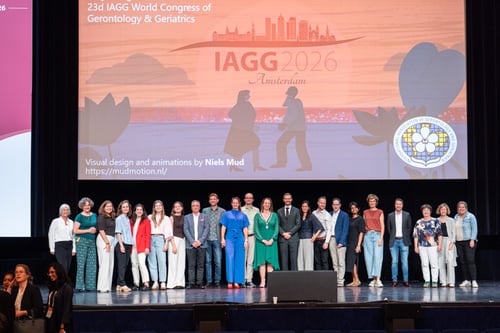
Beyond the Congress: Creating Lasting Impact with IAGG 2026
Discover how IAGG 2026 in Amsterdam created lasting impact through young investigator programmes, public engagement and international collaboration.
Read more -

From ad hoc to professional: why structure is essential for medical conferences
Professionele structuur voorkomt stress en fouten bij medische congressen. Ontdek waarom een vaste werkwijze onmisbaar is voor succes.
Read more -
How a Professional Congress Organiser (PCO) ensures a flawless accreditation application
Accreditation is complex. Discover how a professional conference organizer (PCO) supports medical associations in achieving a flawless accreditation process.
Read more